Minoxidil treatment for hair loss is a clinically proven solution for male and female pattern baldness. Learn how minoxidil helps reduce hair thinning, stimulate regrowth, and manage progressive hair loss safely under a dermatologist's guidance.
Among all non-surgical options available today, minoxidil treatment for hair loss remains one of the most prescribed and clinically studied medical therapies worldwide. It is considered a first-line hair loss medication for individuals experiencing early to moderate thinning.
Interestingly, minoxidil was not originally developed for hair. It was first used as a medication for high blood pressure known as “Loniten.” During treatment, doctors observed increased hair growth as a side effect. This discovery led to the development of topical formulations specifically designed for scalp use.
Today, millions of patients use minoxidil-based formulations every year as a primary medical treatment for hair loss due to its ability to stimulate follicular activity and slow progressive thinning when used consistently. However, what many patients in India often miss is that minoxidil works best when prescribed at the right stage, in the right concentration, and with proper diagnosis.
At IHT (India Hair Transplant), minoxidil is not treated as a cosmetic product or just a quick over-the-counter solution. It is prescribed only after a detailed scalp examination, hair loss pattern assessment, and identification of underlying triggers such as genetics, stress, hormonal imbalance, or nutritional deficiencies.
Under the supervision of India’s experienced dermatologists with 20+ years of expertise in managing pattern hair loss, minoxidil is prescribed with careful dosage selection, clear patient guidance, and regular follow-up monitoring to ensure safe, consistent, and long-term results rather than short-term expectations.

Minoxidil is an FDA-approved hair loss medication used to manage androgenetic alopecia and early-stage thinning in both men and women. It works by improving blood flow around hair follicles and prolonging the anagen (growth) phase of the hair cycle. This helps miniaturised follicles produce thicker and longer hair strands over time.
Minoxidil is not a permanent cure for genetic hair loss. However, when used consistently as part of a structured hair regrowth treatment plan, it can help:
Minoxidil is also commonly used as a supportive therapy after hair transplant surgery and alongside treatments such as PRP, GFC, or topical finasteride to help preserve native hair and enhance overall density outcomes. It delivers the best results in thinning areas where follicles remain active rather than in completely bald regions.
Minoxidil treatment for hair loss is available in various formulations at pharmacies, and the choice depends on the stage of hair loss, scalp condition, and individual response to treatment. Choosing the appropriate form requires proper diagnosis and medical advice evaluation.
Broadly, minoxidil is available in two forms. Topical minoxidil is directly applied to the scalp and targets the follicle level, making it the most commonly recommended option. In certain cases, oral minoxidil may be prescribed under medical supervision when topical therapy is unsuitable or when a response needs optimisation.
The effectiveness of minoxidil relies on early intervention, proper concentration choice, regular use, and precise diagnosis.
Topical minoxidil is applied directly to the scalp in areas where hair is thinning. It is most commonly available in 2% and 5% concentrations, with 5% being the more frequently recommended strength for male pattern hair loss. For women, 2% or 5% may be advised depending on suitability and scalp sensitivity. It comes in two main forms:
Liquid (Solution):
Applied with a dropper for precise application to thinning areas. It penetrates effectively but may cause mild dryness in some individuals because of its alcohol content.
Foam:
Easier to distribute and often favoured for sensitive scalps. It generally causes less irritation and dries more quickly after application.
Key benefits of topical minoxidil:
However, not everyone needs the same concentration or approach. A dermatologist should advise the appropriate formulation. It is most effective when started early, while hair follicles are still active.
Oral minoxidil is prescribed in low doses in carefully selected cases. It is considered when topical therapy is not tolerated or when treatment response needs optimisation.
The appropriate dosage is selected based on scalp examination, hair loss pattern, and overall medical profile.
Minoxidil is one of the most extensively researched and widely recommended medical treatments for pattern hair loss. Although it is available as an over-the-counter medication in India, its effectiveness depends on correct concentration selection, consistent usage, and proper diagnosis.
While it can be purchased without a prescription, it delivers the safest and most reliable results when used under a dermatologist’s supervision as part of a structured hair loss treatment plan.
When used as part of a combined therapy plan, minoxidil supports ongoing follicle activity between sessions and improves overall long-term treatment stability under medical supervision.
Minoxidil delivers the best results when initiated at the early signs of hair thinning, before follicles become permanently inactive. It must be used consistently, exactly as prescribed, either once or twice daily for topical formulations, or in the precise low dose if oral therapy is advised. Proper application on a clean, dry scalp is essential for optimal absorption. Results depend on long-term adherence and regular dermatology follow-up to adjust dosage or combine therapies when required.
How to Use Topical Minoxidil
Topical minoxidil works directly at the scalp level and must be applied correctly to ensure proper absorption and follicle stimulation. Incorrect application is one of the most common reasons for suboptimal results.
Regular follow-up ensures the correct concentration and frequency are maintained for long-term effectiveness.
How to Use Oral Minoxidil
Oral minoxidil is prescribed in carefully selected cases and should only be used under strict medical supervision. Because it affects the body systemically, dosage precision and monitoring are essential.
Oral therapy is considered when topical response is limited or not tolerated.
When to Start Minoxidil
Minoxidil works best when started in:
It is less effective in completely bald areas where follicles are no longer active.
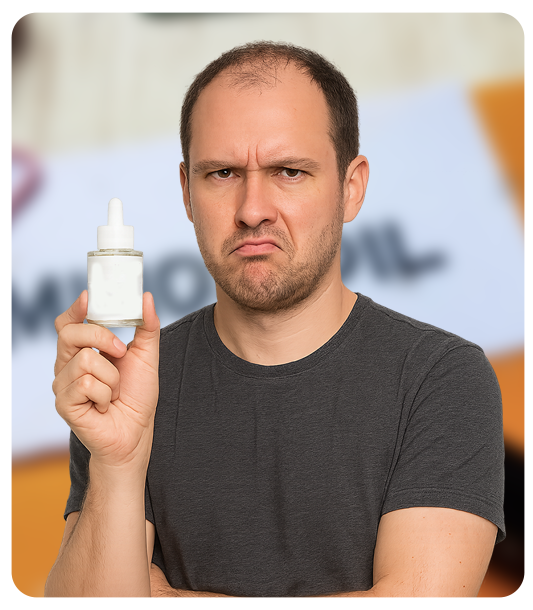
Minoxidil is generally considered safe when used correctly; however, it may not be appropriate for everyone. A thorough medical evaluation is recommended before starting treatment to assess overall health, scalp condition, and potential risk factors.
Minoxidil should be avoided or used only under strict medical supervision if you:
In such cases, alternative treatment options may be considered based on scalp examination and medical history. Self-medication without professional guidance can increase the risk of side effects or reduce treatment effectiveness.
👉 Not sure if minoxidil is right for you? Get a personalised scalp evaluation and treatment plan from our hair restoration specialists.
Call 09779944207