Expert-led hair transplant, offering advanced, precision-driven hair restoration solutions that address female hair loss with care, accuracy, and naturally balanced outcomes.
Hair loss in women often presents differently than in men and can be emotionally challenging due to its impact on overall appearance and hair volume rather than isolated bald patches. Thinning along the crown, widening of the central part, or diffuse hair loss can be difficult to conceal and may progress gradually over time, affecting daily confidence and social comfort.
As female hair loss advances, surgical hair restoration requires a careful and medically guided approach. Unlike male hair loss, many women retain a preserved frontal hairline but experience diffuse thinning, making donor area assessment, graft selection, and density planning especially important. Hair transplant planning in women therefore focuses not only on restoring visible thinning but also on identifying the underlying cause of hair loss, assessing scalp health, and evaluating the risk of future progression.
Women considering hair transplantation should undergo detailed clinical evaluation to determine whether surgery is appropriate. Factors such as hormonal influences, nutritional deficiencies, stress-related shedding, and medical conditions must be assessed before recommending surgical intervention. Inappropriate case selection can lead to suboptimal outcomes, which is why medical oversight is critical.
At India Hair Transplant (IHT), female hair transplant procedures are planned through surgeon-led clinical assessment and ethical treatment planning. Each case is evaluated individually, with attention to donor area quality, hair calibre, pattern of thinning, and long-term hair health, ensuring that restoration remains natural, balanced, and sustainable over time.
Female pattern hair loss, also known as androgenetic alopecia, is the most common cause of hair thinning in women. It is influenced by a combination of genetic factors, hormonal changes, ageing, and lifestyle influences, leading to a progressive reduction in overall hair density.
Female hair loss often begins with:
An early diagnosis of female hair loss plays a crucial role in deciding whether medical management or advanced options, such as hair transplant, are appropriate for long-term hair restoration or not.
A female hair transplant involves careful extraction of healthy hair follicles from the donor area, usually the back of the scalp, and implanting them into thinning regions, with a strong emphasis on preserving existing hair and maintaining natural scalp coverage.
For women with established, stable hair loss, a hair transplant is considered the most effective long-term treatment, especially when non-surgical therapies are unable to provide adequate density improvement.
As per Dr Kapil Dua (India’s best hair transplant surgeon with extensive experience in hair restoration) Planning a female hair transplant requires a deeper level of clinical judgement because both the donor and recipient areas often contain active, growing hair. Each case must be evaluated individually, taking into account hair density, follicle strength, scalp condition, and the likelihood of future thinning. The focus is not only on improving visible density, but also on maintaining long-term scalp health and predictable outcomes.
The success of a female hair transplant lies in individualised planning, precision execution, and a long-term approach to hair health.
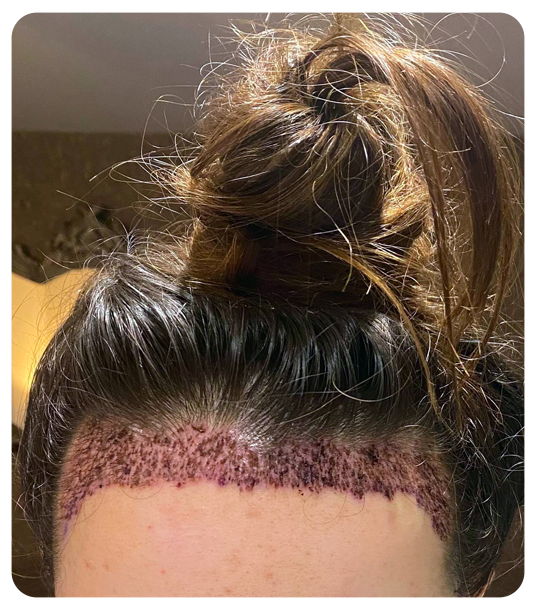
A hair transplant in women is generally recommended for those within the 25–50 age group, where hair loss patterns, donor stability, and long-term progression can be assessed more reliably.
You will be considered a suitable candidate for a hair transplant if you have:
Additional factors considered during suitability assessment include:-
In addition to scalp hair restoration, some women also opt for facial hair restoration procedures, such as eyebrow and eyelash transplantation, to enhance density or volume for cosmetic reasons.
While both procedures aim to restore hair density, male vs female hair transplants differ significantly in planning and execution, mainly due to variations in hair loss patterns and existing hair coverage.
| Aspect | Male Hair Transplant | Female Hair Transplant |
|---|---|---|
| Hair loss pattern | Defined recession or bald areas | Diffuse thinning with existing hair |
| Approach | Coverage of bald zones | Density enhancement within existing hair |
| Graft placement | The recipient area is usually bald, allowing flexibility in slit making and graft placement | Selective placement among existing hair, requiring high-level surgical care |
| Donor area approach | In men, the donor area can be trimmed for better visibility | In women, donor hair is usually left unshaven above and between hair-bearing zones to avoid visible scalp exposure |
| Planning approach | Area-based planning | Medically guided, conservative planning |
| Long-term consideration | Scalp coverage | Existing hair preservation and density enhancement |
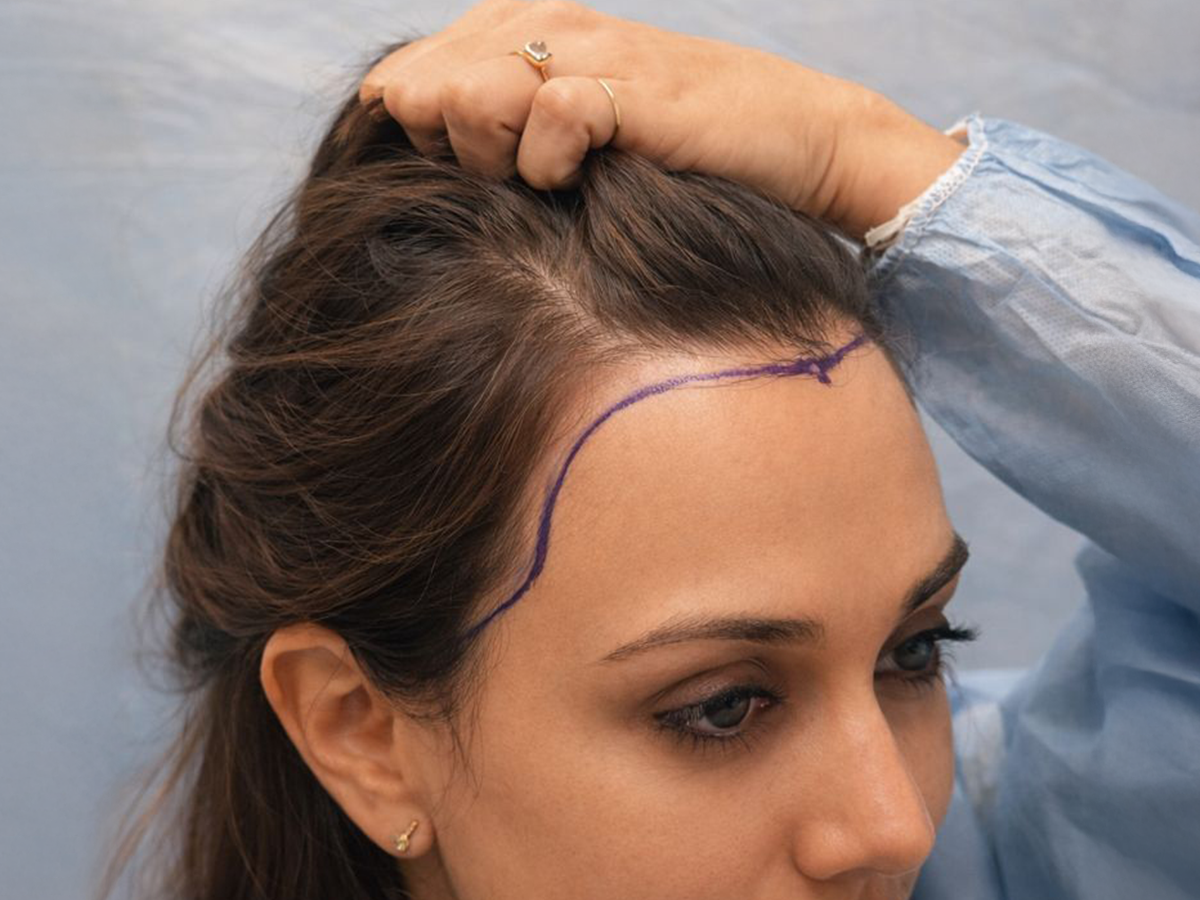
In women, hairline design is planned with the primary aim of preserving the natural frontal hairline, as frontal recession is uncommon. Instead of reshaping the hairline, planning focuses on improving density behind the hairline and within thinning zones, such as the central parting or crown, while maintaining the direction and flow of existing hair. The objective is not to alter facial framing, but to achieve the expected density that continues to look natural over time.
Equally important is donor area planning. In women, the donor area often contains visible, actively growing hair, making assessment and extraction more sensitive. Surgeons carefully identify a stable donor zone and use grafts conservatively to avoid visible thinning, over-harvesting, and imbalance. In many cases, donor extraction is planned using unshaven or partially trimmed areas to maintain discretion.
Female hair transplant techniques are chosen based on individual hair loss patterns and hair assessment by experienced surgeons only, with an emphasis on precision and controlled implantation.
Bio-FUE is a customised procedure of the IHT Clinic, in which we combine the routine FUE technique with additional growth factors known as Bio-therapy to support more predictable growth, better blending with native hair, and long-term stability, making it well-suited for complex female hair transplant cases.
This technique involves extracting and implanting individual hair follicles without shaving the donor or recipient areas. It is selectively planned for women who prefer a discreet procedure, allowing precise treatment while maintaining a normal appearance during the early recovery phase.
Hair transplant in women is carried out through a clearly defined, step-by-step surgical process, beginning with clinical evaluation and planning and progressing through precise graft extraction and implantation under medical supervision.
Before surgery, a detailed clinical evaluation is conducted to assess the hair loss pattern, donor area strength, scalp condition, and overall graft requirement. During this stage, the surgeon designs the hairline after considering facial proportions, age, existing hair density, and the likelihood of future hair loss progression.
Patients are advised to follow specific pre-operative instructions, which typically include:
After surgery, patients are provided with detailed post-operative care instructions to support healing and graft survival.
Follow-up visits are scheduled to monitor recovery and hair growth progression over time.
In women, the donor and recipient areas are often left unshaven, depending on the planned technique. A topical anaesthetic cream is applied before local anaesthesia to enhance comfort during the procedure.
Before surgery begins, the final hairline design is reviewed in detail with the patient based on pre-operative planning. The procedure proceeds only after the patient’s understanding and informed consent are confirmed.
The surgical steps typically include:
As grafts are placed among active hair follicles, surgical precision is essential to avoid follicle damage and achieve even density distribution.
Recovery after hair transplant in women is usually gradual, as the procedure is performed within areas of existing hair. Mild redness, sensitivity, or tightness may be noticed initially and typically settles within a few days when post-operative instructions are followed.
In the first few weeks, transplanted hair shafts commonly shed, which is a normal phase of the hair growth cycle and does not affect follicle survival. New hair growth generally begins around 3–4 months after the procedure.
Visible improvement in hair density develops progressively over 6–9 months, with final outcomes usually assessed between 9 and 12 months. Results vary based on donor quality, surgical planning, individual healing response, and adherence to post-operative care.
Beyond the physical aspects, female hair transplant involves important emotional, psychological, and identity-related considerations, as hair plays a significant role in self-image and confidence. Surgeons must clearly explain that while visible density can be improved, transplanted hair cannot fully replicate the density of original, unaffected hair. Setting realistic expectations is essential to ensure permanent satisfaction, even when the procedure is technically successful.
The cost of female hair transplant varies across clinics because the procedure is customised, not standardised, and requires greater surgical time and precision, which can influence overall cost. A detailed clinical evaluation is essential to determine the most appropriate treatment approach and provide a transparent, personalised cost estimate.
An average cost of a female hair transplant in India typically ranges between Rs. 40,000 to Rs. 4,50,000, depending on the complexity of the case.
The table below provides a graft-wise overview of hair transplant costs in India, offering a general reference to help patients understand how pricing typically varies across different treatment requirements.
In addition to graft count, female hair transplant costing may also be influenced by surgeon involvement and precision in cases of:
At India Hair Transplant (IHT), female hair transplant is approached as a safe, surgeon-planned medical procedure rather than a cosmetic solution. Hair transplantation in women often involves working within areas of existing hair, making graft placement, density planning, and preservation of surrounding hair significantly more demanding.
Each treatment plan is developed after detailed clinical evaluation and focuses on achieving natural density while maintaining long-term hair health. Surgical planning is tailored to the individual hair loss pattern, donor area quality, and future hair loss considerations.
Consultations at IHT are designed to determine whether hair transplantation is the most suitable option or if non-surgical treatments may offer better outcomes. This ensures ethical, patient-first care with realistic expectations and medically guided decision-making.
👉 Book a consultation with our experts to understand whether a hair transplant is the right option for your hair loss.
Call 09779944207