

The most common cause of hair loss in men. Inherited sensitivity of hair follicles to DHT gradually leads to thinning at the temples, hairline, and crown.
Are the early signs of hair loss affecting your confidence? Hair loss in men is often progressive and biologically driven. Understanding male pattern baldness early helps protect follicle health and slow further thinning.
Hair loss in men is a common condition that usually develops gradually over time. Studies indicate that nearly 40–50% of men experience noticeable hair loss by age 35, with the risk increasing as they grow older. What may start as mild thinning or increased hair fall can gradually affect the hairline or crown, most often due to male pattern baldness.
Medically, hair loss is evaluated beyond visible thinning. Specialists assess factors such as hair loss pattern, progression rate, follicle health, and scalp condition to determine whether the condition is temporary, manageable, or progressive.
At India Hair Transplant (IHT), hair loss is considered a medical condition rather than merely a cosmetic issue. Patients visiting our clinics in Delhi, Ludhiana, and Bangalore receive a comprehensive hair and scalp assessment to identify the root cause and choose the most appropriate treatment.
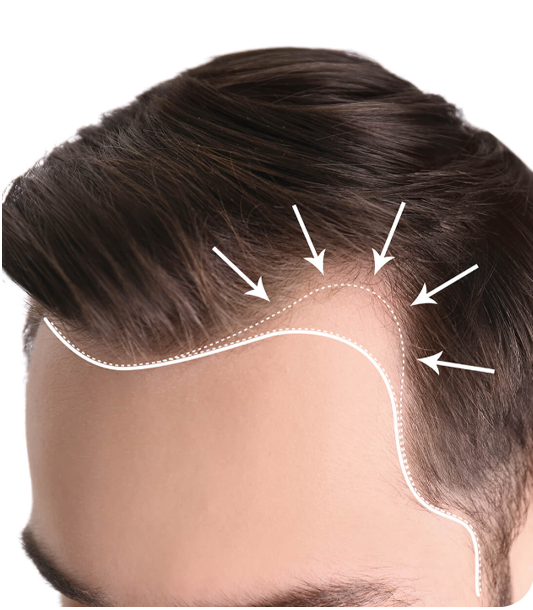
Hair loss in men often begins with gradual changes in hair density, hair fall, or hairline shape rather than sudden baldness. These early signs usually develop slowly and may go unnoticed in the initial stages.
While mild age-related thinning can occur naturally, persistent or excessive hair fall is usually linked to underlying factors such as genetic sensitivity, hormonal changes, or scalp conditions.
Common symptoms of hair loss in men include:
If these symptoms continue or gradually worsen, they may indicate ongoing hair loss rather than temporary shedding.
Hair loss in men does not always follow a single pattern. While male pattern baldness is the most common cause, other types of hair loss can occur due to stress, medical conditions, lifestyle factors, or scalp disorders.
Identifying the exact type of hair loss is important because treatment approaches vary depending on the underlying cause and stage of hair loss.
Male pattern baldness is the most common type of hair loss in men. It is genetically influenced and occurs when hair follicles become sensitive to the hormone DHT. Over time, follicles shrink and produce thinner hair, usually affecting the temples and crown.
Alopecia areata is an autoimmune condition where the immune system mistakenly attacks healthy hair follicles. This often results in sudden hair loss in small round patches on the scalp or beard area.
Telogen effluvium is a temporary form of hair loss that occurs when a large number of hair follicles enter the resting phase of the hair cycle. It is commonly triggered by stress, illness, surgery, or nutritional deficiencies.
Anagen effluvium occurs when hair growth is interrupted during the active growth phase. It is often associated with medical treatments such as chemotherapy or exposure to substances that affect rapidly growing cells.
Traction alopecia develops when hair follicles are repeatedly pulled or stressed due to tight hairstyles, grooming habits, or prolonged tension on the hair roots.
Scarring alopecia refers to inflammatory conditions that permanently damage hair follicles and replace them with scar tissue. Once follicles are destroyed, hair cannot regrow in the affected areas.

Male pattern baldness is the most common cause of progressive hair loss in men. Medically known as androgenetic alopecia, it occurs when genetically sensitive hair follicles react to dihydrotestosterone (DHT), a hormone derived from testosterone.
Over time, this sensitivity causes hair follicles to shrink, producing hair that becomes thinner, shorter, and weaker with each growth cycle. The condition usually follows a predictable pattern, beginning with recession at the temples, frontal hairline, or crown, while the sides and back of the scalp remain relatively stable.
Although male pattern baldness is genetically influenced, the age of onset and progression rate can vary from person to person. Early evaluation helps identify the stage of hair loss and allows appropriate treatment planning.
Hair loss in men can develop due to several underlying factors. While genetic predisposition is the most common cause, hormonal influences, lifestyle habits, and nutritional deficiencies can also affect the health of hair follicles and contribute to gradual thinning.
The most common cause of hair loss in men. Inherited sensitivity of hair follicles to DHT gradually leads to thinning at the temples, hairline, and crown.

Hormonal influences, particularly sensitivity to DHT, can shorten the hair growth cycle and lead to progressively thinner and weaker hair.

Chronic stress, poor sleep, smoking, and unhealthy lifestyle habits can disrupt the normal hair growth cycle and increase hair shedding.

Lack of essential nutrients such as protein, iron, and vitamins can weaken hair follicles and contribute to increased hair thinning.

At India Hair Transplant (IHT), we encourage men to consult a dermatologist even when early signs of hair loss appear. Hair loss often progresses gradually, and identifying it early helps doctors determine whether medical treatments, hair-growth therapies, or advanced hair restoration options may be appropriate.
Early evaluation can help stabilise hair loss and prevent further progression.
Hair loss in men can occur due to genetic, hormonal, and lifestyle factors. At India Hair Transplant (IHT), treatment is recommended based on the stage of hair loss and scalp condition. Depending on individual needs, doctors may suggest medical treatments, regenerative therapies, or hair transplant procedures to help manage and restore hair growth.
Noticing hair thinning or increased hair fall? Speak with our hair restoration experts to understand the cause of your hair loss and explore the most suitable treatment options.
Call 09779944207