Redefining hair restoration for advanced baldness through body hair transplantation, offering a carefully planned solution when scalp donor hair is limited.
Hair transplant surgery often becomes challenging when hair loss progresses beyond the capacity of the scalp donor area. In individuals with extensive thinning or advanced baldness, the availability and quality of scalp donor hair are limited, restricting the scope of conventional hair restoration.
To address this limitation, surgical advancements have made it possible to use hair follicles from selected body areas to support scalp hair restoration, a technique known as Body Hair Transplant (BHT) or body-to-scalp hair transplantation. This approach allows surgeons to utilise additional donor resources where scalp hair alone is insufficient. It is also considered an ideal donor area for eyebrow, moustache, and beard transplants.
BHT is not a replacement for standard scalp hair transplantation, but a supportive procedure that relies on careful donor selection and careful graft handling for patients with a poor donor area. When planned correctly, it can help improve scalp coverage while maintaining a realistic appearance and long-term stability.
A Body Hair Transplant (BHT) is a hair restoration procedure in which healthy hair follicles are extracted from body areas, such as the beard, chest, abdomen, arms, or legs, and transplanted to the scalp or other areas affected by hair loss.
Unlike scalp hair, body hair differs in growth cycle, texture, and behaviour, making careful planning and execution essential. The success of BHT depends not just on extraction and implantation, but on the surgeon’s ability to assess donor suitability, anticipate growth patterns, and integrate body hair naturally with existing scalp hair.
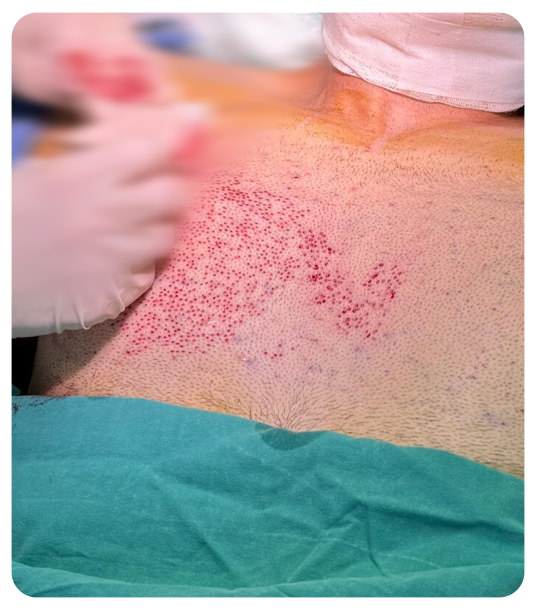
A body hair transplant is a technical procedure that is recommended only when patients are dealing with an advanced stage of baldness or require higher grafts in a single session. This technique is typically considered after a detailed medical evaluation.
You should consider a body hair transplant if you:
A Body Hair Transplant (BHT) is carried out through a carefully structured, step-by-step surgical process that accounts for the unique characteristics of body hair, including texture, growth cycle, and healing behaviour.
Rather than focusing on density alone, BHT prioritises strategic coverage and visual balance, ensuring transplanted hair blends naturally with existing scalp hair and matures realistically over time.
Surgical planning is the most critical stage of a Body Hair Transplant and directly influences safety, natural appearance, and long-term results.
Each body donor area has distinct characteristics. Beard hair is thicker and more robust, while chest or limb hair grows at sharper angles and follows different growth cycles. An experienced surgeon evaluates donor suitability, determines how many grafts can be safely extracted without visible thinning, and plans placement to align with scalp hair direction.
This medically guided planning ensures ethical donor use and forms the foundation for predictable, natural-looking outcomes.
Tiny recipient slits are created in the scalp based on the specific angle, direction, and depth required for body hair grafts.
This step is carefully customised so that transplanted body hair settles naturally and integrates smoothly over time. At IHT, recipient sites are created using an in-house CTS (cut-to-size) blade, where slit dimensions are precisely matched to graft size, helping optimise healing, graft stability, and long-term growth.
Body hair follicles are extracted using fine, sharp punches that work only at the superficial skin level. A no-touch root technique is followed, meaning the hair root is not directly handled during extraction, helping preserve graft vitality.
Extraction typically takes longer than standard scalp hair transplantation, as body hair follicles often lie at acute angles and grow in varied directions, requiring greater precision and surgical control.
The extracted grafts are implanted into the recipient area, most commonly the mid-scalp or crown, where body hair contributes best to visual coverage.
Implantation focuses on blending body hair with existing scalp hair, prioritising balance, coverage, and natural appearance rather than density alone. Careful placement ensures the final result looks harmonious and continues to age naturally over time.
Body Hair Transplant (BHT) is a technically demanding procedure that requires careful surgeon selection. Unlike scalp hair, body hair varies significantly in growth pattern, depth, and healing response.
For this reason, the surgery must be planned and performed by an experienced hair transplant surgeon who understands donor behaviour and graft handling.
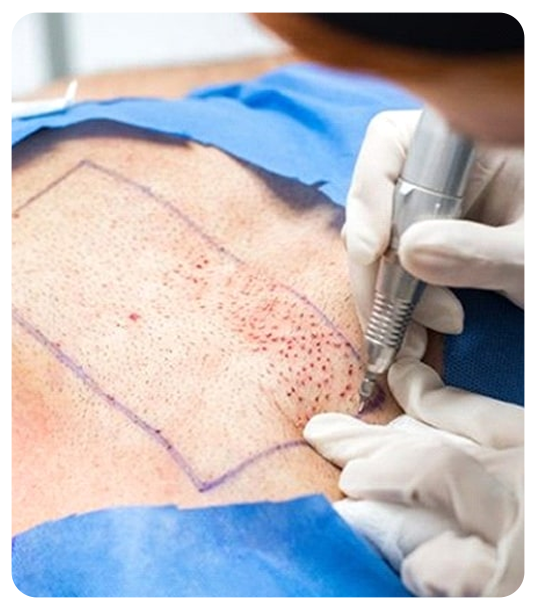
Body Hair Transplant (BHT) is widely recognised in advanced hair restoration practice as a reliable secondary donor option when scalp donor hair is limited or exhausted.
It is most commonly recommended for patients with extensive baldness, donor depletion following previous surgeries, or large coverage requirements where scalp hair alone cannot meet surgical needs.
This technique offers several important benefits:
With careful planning and experienced surgical execution, Body Hair Transplant can deliver long-lasting, natural-looking results even in complex and challenging cases.
Body hair extraction is technically more demanding and time-intensive than a standard scalp hair transplant. Procedures involving body hair are therefore usually priced at the higher end of the spectrum. The final cost of a Body Hair Transplant is determined only after a detailed clinical evaluation that assesses donor suitability, graft requirement, and individual treatment planning, rather than a fixed per-graft quote.
In India, the average cost of a body hair transplant typically ranges between Rs. 90,000 to Rs. 1,15,000, depending on the number of grafts required, donor area used, and overall surgical complexity.
Factors that influence the cost include:
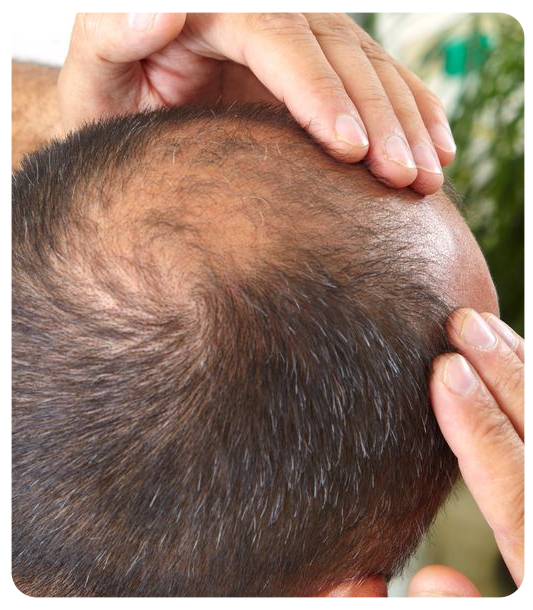
A Body Hair Transplant is generally safe when performed by experienced surgeons using advanced hair restoration techniques. However, as with any surgical procedure, certain risks may exist.
Rare complications can include folliculitis, uneven growth, or poor graft adaptation. These are often related to individual healing response, donor characteristics, or post-procedure aftercare.
Common side effects may include:
India Hair Transplant (IHT) is recognised as one of the best clinics for body hair transplant in India, offering advanced surgical solutions for patients with limited scalp donor hair and extensive baldness.
Body hair transplant at IHT is performed using custom-designed surgical tools and a no-touch root implantation technique, ensuring the follicle root is never directly handled during implantation. This reduces graft trauma and supports higher graft survival.
All procedures are led by an experienced hair transplant surgeon in India and follow strict medical protocols. This ensures ethical donor use and predictable long-term outcomes, especially in advanced and donor-restricted cases.
👉 Book a consultation with our experts to understand whether a hair transplant is the right option for your hair loss.
Call 09779944207