Unshaven FUE hair transplant in India is a specialised technique that enables hair restoration without shaving the scalp. Preserving existing hair, it helps maintain a natural look during recovery. At India Hair Transplant (IHT), each case is carefully assessed to determine if Unshaven FUE is the suitable option for you.
Unshaven FUE hair transplant is especially suitable for individuals who want hair restoration without shaving the scalp. It is often selected by working professionals in corporate roles, business, media, and other client-facing fields who prefer to keep their usual appearance during recovery. By preserving existing hair during the procedure, this technique lets patients continue their daily routines with minimal visible signs of treatment.
At India Hair Transplant (IHT), Unshaven FUE is offered as a specialised, case-dependent approach rather than a routine procedure. It is recommended only when donor hair quality, graft needs, and long-term hair-loss planning align with the patient’s requirements. When performed with proper surgical planning, it allows for hair restoration while maintaining a natural, discreet recover.
People seeking procedures such as long hair transplant in Delhi, Ludhiana, or Bangalore can visit India Hair Transplant (IHT) or WhatsApp our team to schedule a consultation with our specialists and understand whether Unshaven FUE hair transplant is the right option for them.
Unshaven FUE hair transplant, also known as Non-Shaven Follicular Unit Extraction (NS-FUE), is a hair restoration method that enables hair transplantation without shaving the scalp. Instead of fully shaving the donor area, only small sections are carefully micro-trimmed to extract individual hair follicles. The recipient area is usually left unshaven, allowing grafts to be placed between existing hairs.
This helps maintain a natural look from the first day while demanding precise surgical planning and careful graft placement.
FUE hair transplant without shaving can be done in various ways, depending on whether the focus is on the hairline, crown, or density enhancement, as well as the number of grafts needed. Selecting the right surgeon is essential at this stage, as unshaven techniques depend heavily on planning, donor assessment, and precise execution rather than routine procedures.
Donor characteristics, hair length, and long-term planning also affect the choice of unshaven technique.
Suitable for limited areas, this method eliminates the need for full shaving and uses subtly trimmed sections to preserve a natural appearance during recovery.
A narrow, concealed donor strip is trimmed to allow more grafts while keeping the rest of the hair unshaven.
Small sections of the donor area are trimmed in a scattered pattern, allowing graft extraction without shaving the entire scalp. This approach maintains a low-profile recovery while supporting moderate graft requirements, offering a balanced solution between appearance concerns and surgical access.
Note: The choice of unshaven FUE technique depends on donor density, graft requirement, and long-term planning. Not every patient is suitable for every type, and the final approach is decided solely by your surgeon.
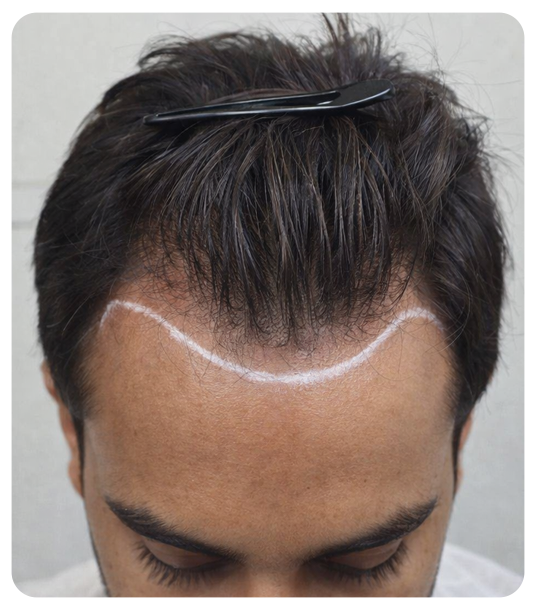
FUE hair transplant uses a careful method and is ideal for those who want to keep their daily routine without visible signs of treatment. It is generally not recommended for advanced baldness or high graft needs, where other FUE methods provide more consistent results.
You might be a good candidate if:
This technique is often suitable for women with diffuse thinning or widening parting, men wanting to refine their hairline, and public figures or celebrities who wish to keep their appearance during recovery.
Unshaven FUE, also commonly referred to as Undetectable FUE, at IHT begins with detailed planning rather than the procedure itself. Because existing hair is preserved, our surgeons carefully evaluate the hairline shape, density requirements, hair direction, donor strength, and the contrast between donor and recipient areas before deciding whether this technique is suitable.
Special attention is given to hairline design, especially in frontal cases, where even small placement errors can be noticeable among existing hair. In crown or density cases, factors such as swirl pattern, spacing, and long-term progression of hair loss are taken into account. Donor selection is equally important, as grafts must be taken from areas that can be accessed without affecting the overall donor appearance.
While the basic steps remain the same as standard FUE, involving individual graft removal and placement, the defining feature of no-shave FUE lies in how donor and recipient areas are managed.
The process starts with thorough planning. The surgeon evaluates hair strength, the severity of hair loss, and whether grafts can be safely inserted between existing hairs. When hair loss is confined to a small area, such as an early hairline or mild thinning, a fully undetectable (unshaved) FUE may be an option. In many cases, up to about 1,000 grafts are enough to cover the area.
In a full unshaven session, the donor area is not completely shaved. Only small, carefully selected sections are accessed, while the rest of the hair stays at its usual length. This helps keep the donor area looking unchanged.
Hair follicles are carefully removed one by one using a round rotary punch, typically measuring between 0.7 to 0.9 mm in diameter, to extract grafts while working among existing hairs. This technique helps preserve graft quality and minimises disturbance to the surrounding donor area.
The recipient area is left unshaven. Slits are made between existing hairs, following their natural direction and angle, so new grafts fit comfortably within the thinning or balding region.
Grafts are carefully inserted one at a time between existing hairs. This step is crucial for creating a natural blend and keeping the procedure undetectable.
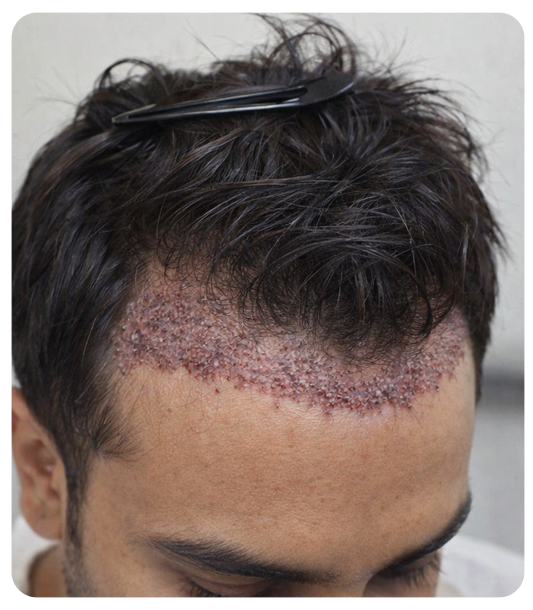
Unshaven FUE offers benefits that extend beyond hair growth alone. When used for the right indications, it combines thoughtful planning, allowing hair restoration to be performed without visible shaving. This not only helps maintain a natural appearance during recovery but also supports patient comfort and confidence, especially for those who wish to continue their routine with minimal discomfort.
Understanding the difference between unshaven and shaven FUE helps patients choose the right approach based on graft needs and recovery expectations. While unshaven FUE prioritises low-visibility recovery through selective donor trimming and implantation between existing hairs, shaven FUE allows easier access and placement for larger graft sessions. The choice depends on graft requirement, donor safety, and desired visibility during recovery.
| Aspect | Unshaven FUE | Shaven FUE |
|---|---|---|
| Donor area | Selectively micro-trimmed or partially shaved | Fully shaved |
| Visibility | Largely concealed | Clearly visible |
| Recipient area | Usually left unshaven | Often shaved or closely trimmed |
| Implantation | Grafts placed between existing hairs | Grafts placed on a shaved surface |
| Graft capacity | Small to moderate | Moderate to large |
| Medical expertise | Higher | Standard |
| Recovery appearance | Minimal visible signs during recovery | Noticeably shaved areas |
| Suitable for | Hairline, density, early thinning | Advanced hair loss |
NOTE: The decision between unshaven and shaven FUE depends on factors such as graft requirement, donor density, hair characteristics, and the patient’s preference for recovery visibility. Your surgeon will recommend the most suitable approach after evaluating the scalp and long-term hair restoration plan.
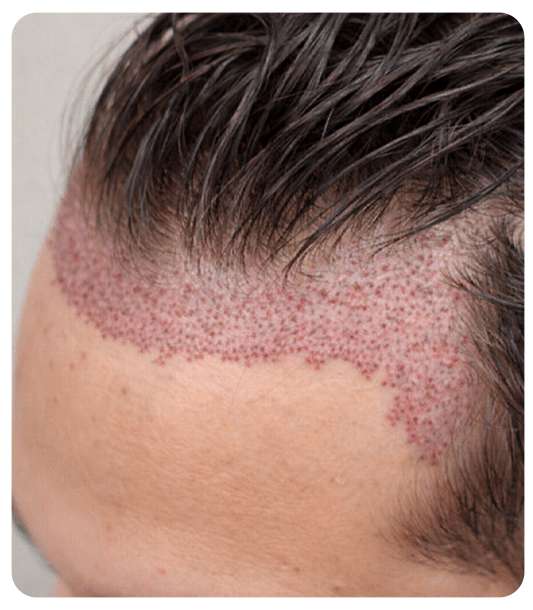
The unshaven FUE hair transplant cost is generally higher than the standard shaved FUE procedure because it requires more time and surgeon involvement. Since grafts are extracted and implanted between existing hairs, every step needs careful planning to maintain graft safety.
Generally, the average cost of a no-shave hair transplant ranges from Rs. 100 to Rs. 150 per graft. The exact cost varies by patient and depends on multiple clinical and procedural factors, such as who performs the surgery, the number of grafts, and any complications.
Factors that influence cost are:
Choosing the right clinic for Unshaven FUE hair transplant emphasises experience in donor harvesting, hairline planning, and long-term donor preservation over marketing claims. Since the procedure involves working among existing hairs, the outcome depends largely on the surgeon’s skill, precision, and careful surgical planning.
Patients seeking discreet procedures such as long hair transplants in Ludhiana, Delhi, or Bangalore often prefer techniques that hide signs during recovery. At India Hair Transplant (IHT), Unshaven FUE is offered as a specialised option for suitable candidates.
The procedure is performed under the guidance of Dr Kapil Dua, who has over 20 years of experience in managing complex and specialised hair restoration cases. Under his supervision, the team follows internationally accepted medical practices and strict surgical protocols to ensure patient safety and natural-looking results.
Every case starts with a detailed consultation where the hair loss pattern, donor quality, and long-term planning are carefully assessed. This helps determine whether Unshaven FUE is the best option or whether another hair transplant technique would yield safer, more predictable results.
👉 Speak with our hair transplant experts to check your eligibility for an Unshaven FUE hair transplant and understand the best treatment plan for you.
Call 09779944207