Beard hair transplant for men seeking a long-term, permanent solution to uneven or no beard growth, with natural results achieved through careful planning and expertise.
A beard is more than just facial hair; it is often a reflection of masculinity, confidence, and personal style. For many men, an uneven, patchy, or poorly defined beard can feel frustrating, especially when grooming efforts fail to create the desired look. Genetic factors, hormonal influence, scars, burns, acne, or previous skin conditions can all contribute to irregular beard growth.
A beard hair transplant is designed to restore natural beard density and shape in such cases. By carefully transplanting healthy hair follicles from a suitable donor area into regions with poor or no growth, the procedure helps create a fuller, well-defined beard that blends naturally with existing facial hair.
For men seeking a reliable solution for long-standing beard growth concerns, beard transplantation offers a predictable and durable option when planned and performed by experienced surgeons with proper density and direction planning. At India Hair Transplant (IHT), beard hair transplant procedures are carried out following strict clinical protocols and personalised assessment, which is why IHT is widely regarded as one of the best clinics for beard hair transplant in India delivering better results at affordable cost
A beard hair transplant is a procedure performed to improve beard density, shape, or coverage in areas where facial hair growth is weak, patchy, or completely absent. The treatment involves relocating healthy hair follicles from a suitable donor area, most commonly the scalp, to areas of the beard that lack uniform growth.
Each hair follicle is extracted and implanted individually, allowing precise control over angle, direction, depth, and spacing. This level of control is critical for achieving a natural-looking beard transplant result that matches existing facial hair. Once healing is complete, the transplanted hair grows permanently and can be shaved, trimmed, and styled just like a natural beard.
As Dr. Kapil Dua explains:
“Facial hair transplantation is not just about adding hair. It is about recreating natural growth patterns that enhance a man’s appearance and confidence. In beard transplants, even a slight mismatch in growth angle can affect how natural the final result looks, which is why careful planning and surgical control are essential.”
Unlike temporary cosmetic solutions, a beard hair transplant restores real hair follicles and offers a long-term solution for men seeking a fuller, well-defined, and confidence-enhancing beard appearance.
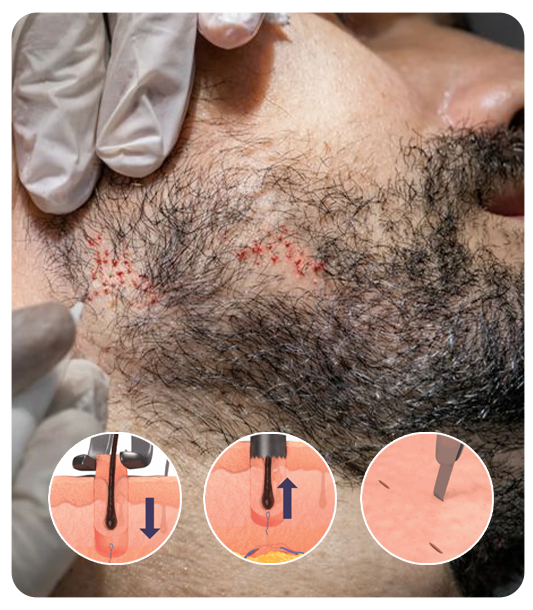
A beard hair transplant is a carefully planned surgical procedure performed with attention to facial anatomy, beard growth patterns, and donor availability. The donor area is usually shaved to allow safe and precise follicle extraction, while the beard area is typically left unshaven to help the surgeon assess natural hair direction and plan accurate graft placement.
The procedure begins with detailed beard hairline and shape planning. Facial structure, beard zones, and natural growth direction are carefully assessed by the surgeon to create a balanced, age-appropriate beard design. Once the proposed design is explained and mutually agreed upon, the beard outline is marked and patient consent is taken before proceeding.
Micro-slits are created in the beard area using cut-to-size (CTS) planning, where slit dimensions are precisely matched to individual graft sizes. This step is critical for maintaining proper angle, depth, and spacing to ensure natural-looking beard growth.
Hair follicles are extracted individually using a small-diameter, handheld rotary punch. Extraction is performed with controlled density, typically around 40–80 hairs per square centimetre, ensuring donor area safety and preservation. Depending on suitability, follicles may be harvested from the scalp or beard donor area.
Each follicle is implanted carefully into the prepared slits, maintaining precise alignment, depth, and direction. Single-hair grafts are commonly used during beard implantation to ensure a soft texture and seamless blending with existing beard hair for a natural final appearance.
A beard hair transplant is usually considered for men who are not satisfied with their natural beard growth and are looking for a permanent and reliable solution for beard-related concerns that cannot be corrected through grooming or topical products alone.
The procedure is generally suitable for individuals aged 25 years or above, once beard growth patterns are clearly established. You may be a suitable candidate if you have:
Final suitability for a beard hair transplant is always determined by a qualified doctor after detailed clinical assessment, ensuring patient safety, ethical practice, and predictable, natural-looking outcomes.
Beard hair transplantation requires a high level of precision due to the visibility of the facial area and the need for natural blending with existing beard hair. Surgeon experience in beard-specific cases is essential to achieve correct hair angle, direction, and density. A specialised hair transplant clinic follows refined techniques to minimise tissue trauma and support long-term graft stability.

After a beard hair transplant, the skin in both the donor and beard areas may become temporarily sensitive as healing begins. Treating the skin gently during this phase plays an important role in protecting the grafts and supporting a smooth recovery.
Following post-procedure instructions carefully is essential for proper healing and achieving optimal beard hair transplant results. Patients are usually advised to:
Adhering to these care guidelines helps reduce unnecessary stress on the grafts, lowers the risk of complications, and supports healthy healing during the early recovery period.
Beard hair follows a naturally complex growth cycle, and when transplantation is planned with proper medical expertise, results develop gradually over time. Understanding this progression helps set realistic expectations and allows patients to better interpret beard transplant before and after changes during each stage of recovery.
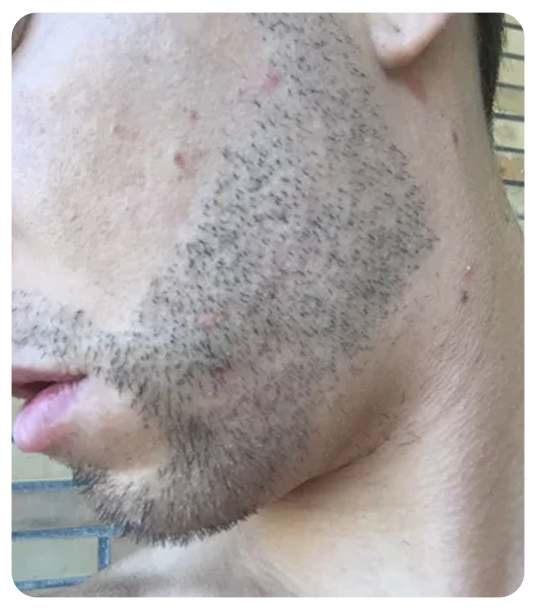
Cases often described as a beard hair transplant gone wrong are usually linked to inadequate planning, limited surgeon experience, or compromised clinical standards rather than the procedure itself. Beard transplantation requires precise control of graft angle, depth, and direction due to the unique growth pattern of facial hair.
Based on clinical observations in hair restoration practice, the majority of patients experience only mild, short-term effects, with serious complications reported in less than 5% of properly performed cases.
Temporary risks that may occur include:
Choosing an experienced surgical team and following post-procedure care guidelines significantly reduces these risks and supports stable, natural-looking results.
The cost of a beard hair transplant in India is calculated per graft and not offered as fixed packages. The final beard transplant cost depends on factors such as desired beard density, the area to be covered, donor hair source, and the technique used during the procedure.
In most cases, beard hair transplant procedures require approximately 2,000 to 2,500 grafts. Based on this range, the average cost of beard hair transplant in India typically falls between Rs. 90,000 to Rs. 2,50,000. The exact cost may vary depending on individual treatment planning and graft requirements.
Factors that influence beard hair transplant cost include:
A personalised consultation helps evaluate these factors accurately and ensures transparent cost planning before the beard hair transplant procedure.
India Hair Transplant (IHT) is regarded as one of the best clinics for beard hair transplant in India, offering high-quality treatment with transparent and affordable pricing. The focus at IHT remains on safe, ethical procedures and dependable, natural-looking results rather than cosmetic shortcuts.
Key reasons patients choose IHT for beard hair transplant include:
What patients value most at IHT is the experience of expert doctors who understand how facial skin responds to surgery, how hair direction affects appearance, and how small technical details influence long-term confidence and results.
If you are considering beard restoration, a consultation at IHT helps you understand suitability, density planning, and realistic outcomes before proceeding with treatment.
👉 Book a consultation with our experts to understand whether a hair transplant is the right option for your hair loss.
Call 09779944207