Key safety measures and recovery guidelines play a critical role in hair transplant outcomes.Understanding these aspects helps support safe healing and long-term results.
Clinical evidence and long-term outcomes in hair restoration consistently show that successful results depend more on proper pre-operative planning, surgical safety, and structured post-operative recovery care than on the procedure day alone. Inadequate medical assessment, poor infection control, improper donor area management, or insufficient recovery guidance are commonly associated with graft failure and avoidable complications.
For this reason, hair transplant is approached as a medical process with defined safety and recovery protocols, rather than a one-time cosmetic solution
A hair transplant uses the patient’s own hair follicles, ensuring biological compatibility and eliminating the risk of rejection. Both extraction and implantation are performed at the superficial layers of the scalp, without involvement of deep tissues or vital structures. When carried out under proper medical supervision and sterile conditions, the procedure remains medically controlled and predictable in terms of safety and healing.
At IHT, safety and recovery are prioritised at every stage from medical assessment to infection control during surgery, and structured post-operative care that supports graft survival and scalp healing to minimise complications and achieve stable, long-term results.
The safety of a hair transplant largely depends on how well the procedure is planned before surgery. Surgeon experience and detailed medical evaluation are combined to assess a patient’s eligibility, identify potential risks, and plan the procedure safely.
This integrated approach helps determine donor suitability, anticipate recovery needs, and minimise complications before surgery. Key hair transplant pre-operative precautions include:
When these hair transplant pre-operative precautions are followed under proper medical supervision, the procedure remains controlled, safe, and predictable, with a lower risk of complications and smoother post-operative recovery.
Many patients want to understand how safe a hair transplant is during surgery and what factors truly influence safety and recovery. This stage is critical, as surgical decisions made during the procedure directly affect graft survival, healing, and long-term results.
The most important safety factor during hair transplant surgery is who performs the procedure. Hair transplant safety depends heavily on the surgeon’s medical qualification, hands-on experience, and clinical judgment.
Surgeon involvement is essential for natural hairline design, safe graft extraction and placement, and avoiding over-harvesting or unnatural density. Proper planning at this stage reduces complications and improves predictability.
Hair transplant surgery is performed under local anaesthesia, allowing the patient to remain awake and comfortable throughout the procedure.
In most cases, discomfort is mild and well-managed, helping reduce stress and maintain patient comfort while ensuring a controlled surgical environment.
Strict hair transplant safety precautions are followed during surgery to minimise infection risk. This includes fumigated procedure rooms, OT-grade sterile setups, and controlled graft handling areas.
Maintaining a sterile surgical environment plays a crucial role in smooth recovery and graft survival.
Modern hair transplant techniques focus on precision, minimal tissue trauma, and graft survival. Safe techniques are designed to work only at the superficial layers of the scalp, protect deeper tissues, reduce donor area trauma, and support faster healing.
The choice between techniques such as FUE, Unshaven FUE, FUT, or Bio-FUE is made by the surgeon based on donor safety and the area to be transplanted.
At IHT, procedures are performed using the Bio-FUE™ technique, incorporating customised tools such as CTS (cut-to-size) blades and flat punch technology. By standardising punch size and depth, this approach supports safer extraction, better graft viability, and more predictable healing.

After a hair transplant, proper nutrition supports healing, graft survival, and overall recovery. A balanced diet rich in protein, vitamins, and minerals helps the scalp heal faster and supports healthy hair regrowth.
What to Eat After a Hair Transplant-
What to Avoid during early recovery:
A healthy diet complements post-operative care and helps grafts to heal faster.
After a hair transplant, the treated areas remain sensitive and require careful handling. Recovery is gradual and happens in stages, with each phase playing an important role in graft survival, scalp healing, and final results. Understanding this timeline helps patients follow the right precautions and recover safely.
The first 7 days after hair transplant are the most critical for graft stability.
What is normal during this phase:
Post-care instructions:
This phase forms the foundation of safe hair transplant surgery recovery.
By 1 month after hair transplant, most surface healing is complete, but internal recovery continues.
What to expect:
Care guidelines at this stage:
This phase often raises concern in patients, but shedding is a normal part of the hair transplant recovery process.
By 3 months after hair transplant, the recovery phase is largely complete and the focus shifts from healing to new hair growth.
What to expect at this stage:
Hair growth after 3 months of transplantation is typically slow and subtle. Thickness, strength, and density continue to improve over the coming months as follicles mature and stabilise.
Final hair transplant results are usually visible by 9 to 12 months, with most patients seeing optimal outcomes after 12 months. By this stage, transplanted hair has fully matured and blends with existing hair.
What to expect at 12 months:
At this point, the hair transplant recovery process is considered complete for most individuals, although minor improvements in texture and thickness may continue beyond one year.
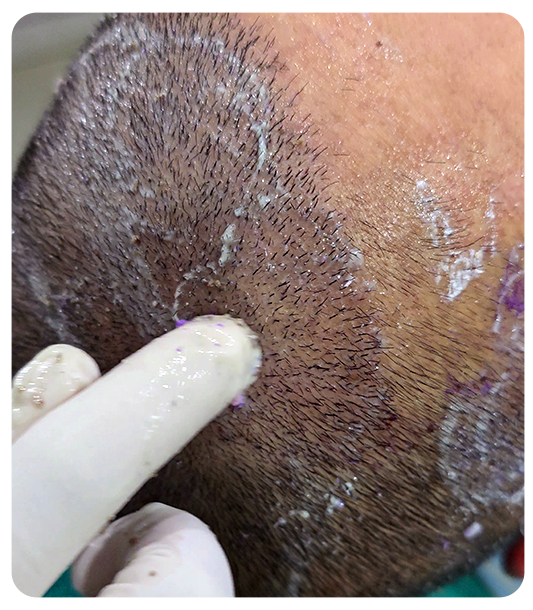
Hair transplant safety and recovery are managed as a continuous medical process, not limited to the day of surgery. At IHT, our surgeons follow ISHRS-guided protocols before, during, and after the procedure to minimise risks, protect graft survival, and support predictable healing.
Key measures that ensure safety and recovery include:
This structured approach ensures that hair transplant procedures remain safe, predictable, and recovery-focused, aligning with best medical practices followed for hair transplant treatment in India.
👉 Book a consultation with our experts to understand whether a hair transplant is the right option for your hair loss.
Call 09779944207